
Physical Output
Creatine in the Active Man's Routine: An Editorial Review
Adrian Lim
·
·
11 min read

For the better part of a year, the two bottles sat side by side on the same shelf — one amber, one white, both unremarkable in their design. Vitamin D and magnesium: a pairing that appears with quiet regularity in the daily supplement stacks of active men across Indonesia and beyond. What follows is an editorial account of that routine — not a directive, but a documented observation of how these two nutrients became fixtures in the mornings of men who take their daily nutritional habits seriously.
Vitamin D's role in men's daily nutritional routines has received considerable attention in published research over the past decade. The pattern observed across active men's journalling habits is consistent: vitamin D tends to be taken in the morning, often with the first substantial meal of the day. The reasoning — as reported by practitioners of the habit — is pragmatic. Vitamin D is fat-soluble, and a morning meal that includes some dietary fat supports its integration into the daily nutritional routine.
What the journals report is not a sudden transformation but an incremental awareness. The observation, returned to repeatedly in supplement journalling accounts, is that vitamin D becomes less a conscious act and more a settled part of the morning sequence — as unremarkable as water or coffee. The editorial perspective here is that this normalisation is itself meaningful. A supplement integrated without friction into daily life has a different relationship to consistency than one taken only when remembered.
Published nutritional research notes that vitamin D supports daily energy rhythm and overall nutritional balance. Active men operating in equatorial environments — where sun exposure varies significantly by season and daily schedule — frequently note its presence in their stacking habits as a corrective to the nutritional gaps that an active outdoor lifestyle can introduce. The journals here are observational, not prescriptive. The supplement functions as an addition to a varied diet, not as a substitute for one.
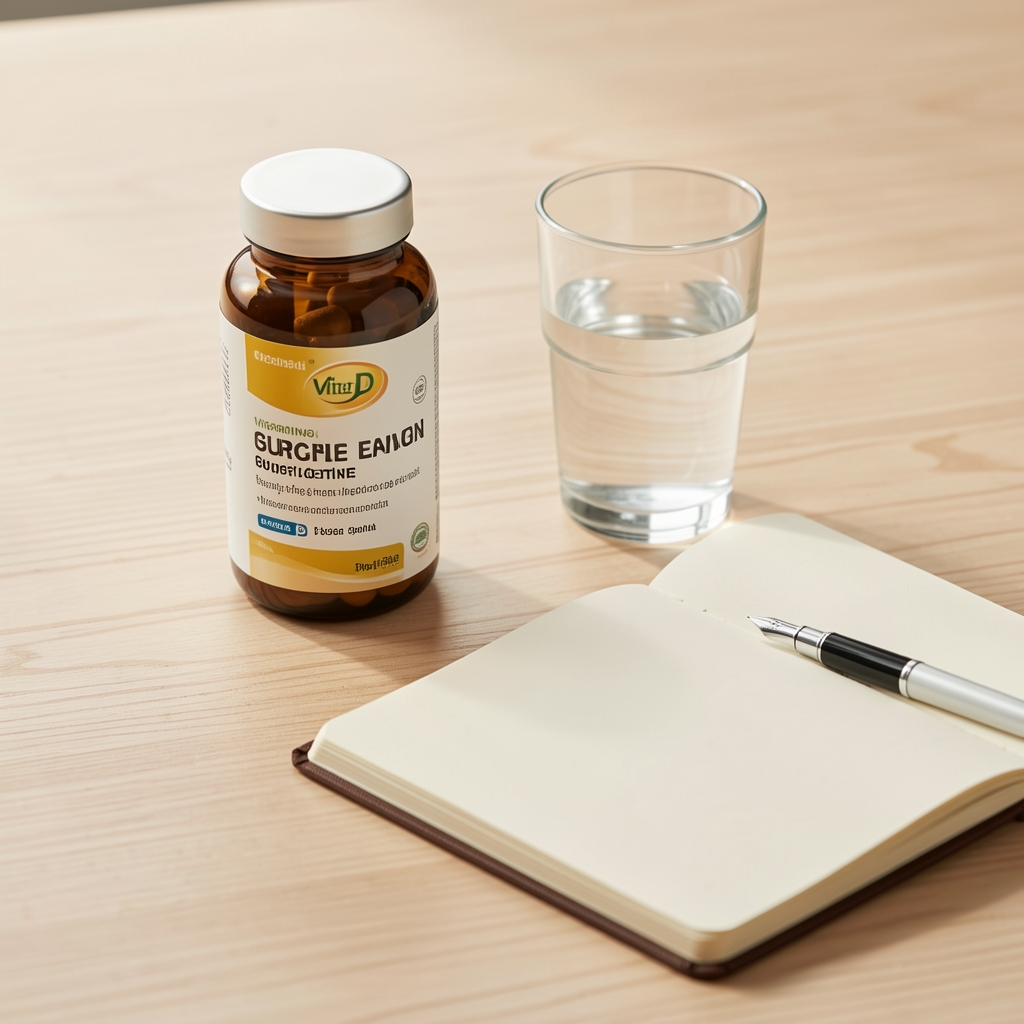
Morning supplement setup — Jakarta, January 2026
Magnesium occupies a different position in the men's supplement stack. Where vitamin D is a morning fixture, magnesium appears most consistently in the evening, typically taken an hour before sleep. The journalling pattern here is one of recovery awareness. Active men who engage in resistance training note magnesium's presence in the hours after physical activity — less as a performance input and more as part of what one contributor described as "the wind-down stack."
Published nutritional research observes that magnesium supports muscle recovery rhythm after physical activity. The accounts reviewed for this article converge on a similar observation: men who introduced magnesium into their evening routine reported a change in the quality of their rest and recovery awareness over time. This is not a dramatic shift — the language used in personal supplement journals tends to be measured and incremental. One Jakarta-based contributor, who has documented his daily stack for eight months, described it as "the difference between a rushed morning and a settled one."
The form of magnesium matters, at least in terms of the observational literature. Magnesium glycinate appears most frequently in the reviewed stacks, cited for its reported ease on the digestive system. Magnesium oxide appears less often, and when it does, journal entries frequently note a recalibration toward a gentler form within a few weeks. These are not specialist observations — they are the documented habits of active men making evidence-informed choices within their daily routines.
"A supplement integrated without friction into daily life has a different relationship to consistency than one taken only when remembered."
Marcus Webb — Erovan Journal, January 2026
The co-presence of vitamin D and magnesium in men's daily supplement stacks is not arbitrary. Published nutritional research observes an interrelationship between the two: magnesium contributes to the body's engagement with vitamin D, and the two nutrients appear together in the supplement literature with notable frequency. The stacking habit, as documented in the reviewed journals, tends to emerge organically — men begin with one, then encounter the published case for the other, and over time the pairing becomes a settled feature of the daily routine.
What the editorial record suggests is that the pairing represents a particular kind of nutritional awareness: whole-food-first thinking, with supplementation as a deliberate addition where dietary variety alone may not fully cover the demand of an active lifestyle. The men whose supplement journals informed this article consistently described their approach in these terms — not as dependency on supplements, but as a considered layer of support atop a varied and thoughtful diet.
In practical terms, the documented routine is straightforward: vitamin D with breakfast, magnesium in the evening. The time investment is minimal. The habit, once established, requires no conscious effort to maintain. And the journalling record — across several months of documented daily routines — suggests that the consistency of the habit is where its value, for active men, tends to reside.
One dimension of this editorial subject that receives less attention in published nutritional writing is the act of journalling itself. The men whose supplement habits informed this account were not simply taking vitamins — they were recording the experience. Daily notes, weekly summaries, observations on energy awareness and physical recovery patterns: the supplement journal is itself a nutritional practice, and one that appears to reinforce the consistency of the habits it documents.
This is an observation, not a recommendation. Erovan Journal does not recommend supplementation routines. The editorial perspective here is that the journalling habit produces a particular kind of engagement with one's own nutritional patterns — attentive, incremental, and grounded in the daily specifics of what was taken, when, and alongside what food. For active men interested in supplement stacking habits, the journal may be as useful as the supplements themselves.
The editorial synthesis from the reviewed journals is that a daily supplement routine involving vitamin D and magnesium is, at its core, a habit of nutritional attentiveness. It does not require elaborate preparation, expensive products, or rigid scheduling. What it requires is consistency and the habit of noticing — which is to say, the same qualities that make any daily practice sustainable over time.
Active men in Jakarta and across Indonesia operate in a nutritional context shaped by equatorial light, a rich local food culture, and the particular demands of an active lifestyle. Vitamin D and magnesium sit within that context as two of the more consistently documented additions to the men's daily supplement stack — not as panaceas, but as considered contributions to a nutritional routine that begins, always, with whole food.

Marcus Webb has documented men's nutritional habits across active and professional contexts since 2022. He is the primary editor of Erovan Journal and oversees all editorial content published on the platform.
More from Marcus: Creatine in the Active Man's Routine →